Downspouts & Drainage in New Braunfels, TX
Downspout extensions, buried drain lines, and splash blocks that carry roof water well away from the house — the part that actually protects a foundation on Central Texas clay.
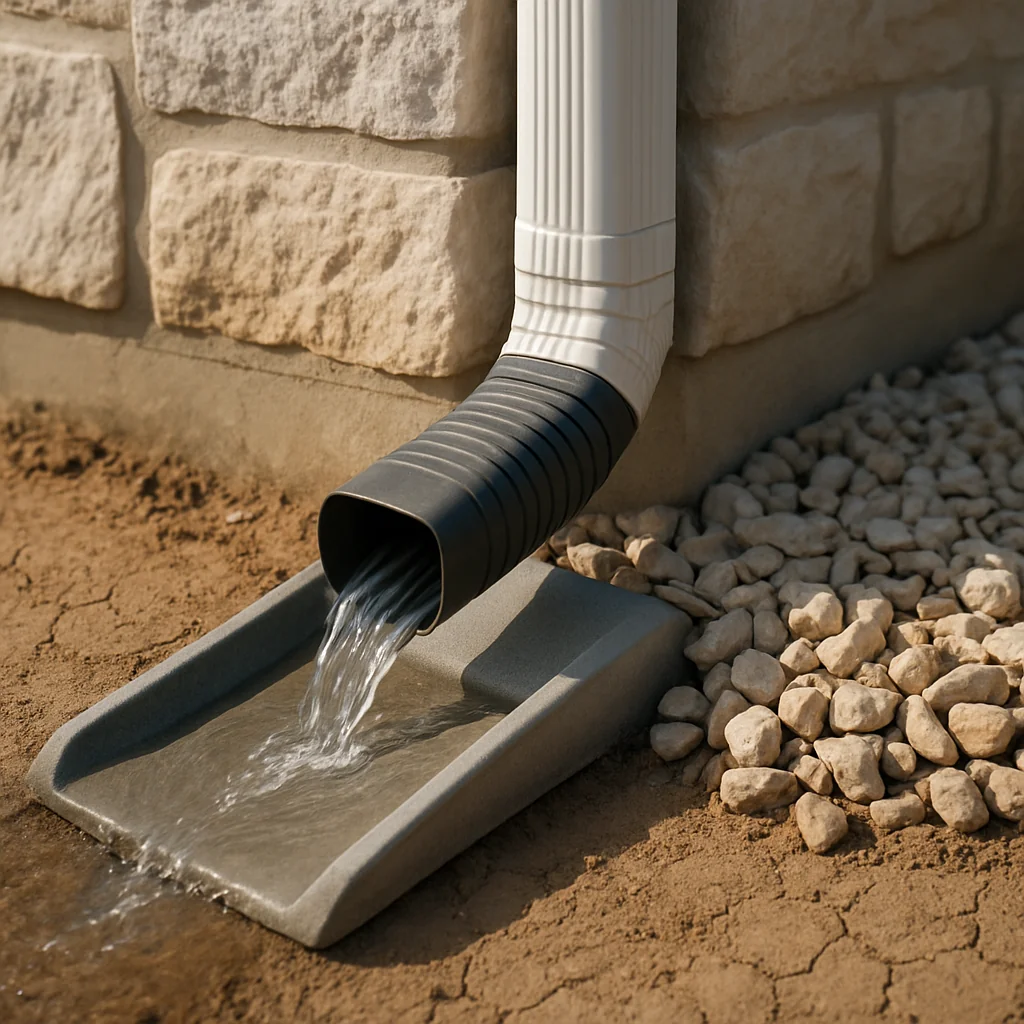
Why Drainage Is the Whole Point Here
Gutters collect roof water; downspouts and drainage decide where it goes. In New Braunfels that second part is the one that protects the home, because the soil is expansive clay — it swells when it's wet and shrinks when it's dry, and that constant movement is what cracks slabs, sticks doors, and shifts foundations across Central Texas. A downspout that dumps a roof's worth of water right at the base of the wall feeds that cycle. A downspout that carries the water ten or more feet away from the house breaks it.
The work ranges from simple to involved: splash blocks and above-ground extensions that move water a few feet past the wall (the basic, low-cost step), buried drain lines that pipe the downspout underground to daylight or a pop-up emitter well away from the house (the clean, permanent solution), and adding downspouts where long gutter runs don't have enough outlets to drain in a heavy rain. Grading and where the water can legally and safely go are considered so it's not just moved onto a neighbor or a walkway.
Pricing depends on the approach — extensions are inexpensive; buried drains are priced by the run. Quoted in writing before work begins.
Signs Your Drainage Needs Work
Water pooling or splashing at the foundation after rain, mulch washing away below a downspout, or a muddy trench at the drip line — all signs the water is landing where it shouldn't.
Downspouts that just end at the wall with a splash block that's cracked, buried, or pointed the wrong way. Even good gutters fail their job if the downspout drops the water at the foundation.
Foundation or door symptoms on a home with poor roof drainage. Drainage isn't a cure for an existing foundation problem, but uncontrolled roof water is one of the most common things that makes it worse — and one of the most fixable.
Downspouts & Drainage Near You
Downspouts & Drainage FAQ
Because the soil is expansive clay that swells and shrinks with moisture, and that movement is the main driver of foundation problems in Central Texas. A downspout that dumps roof water at the base of the wall keeps the soil there wet and moving. Carrying the water well away from the house is one of the cheapest, most effective things a homeowner can do to protect the foundation.
A common rule of thumb is to get roof water at least several feet — ideally five to ten or more — away from the foundation, to where it can drain away or soak in without sitting against the wall. Extensions do this above ground; buried drain lines to a daylight or pop-up emitter do it cleanly and permanently. The right distance depends on the grade around the home.
Above-ground extensions are inexpensive and move water a few feet past the wall, but they can be in the way of mowing and get knocked loose. Buried drain lines pipe the downspout underground to a discharge point well away from the house — cleaner, permanent, and out of the way, at a higher cost. Both beat a downspout that ends at the foundation.
No — drainage isn't a foundation repair, and an existing foundation issue needs a foundation specialist. But uncontrolled roof water is one of the most common things that causes or worsens foundation movement on clay soil, so getting gutters and downspouts to carry water away is a sensible, inexpensive step that protects the home going forward.
Related Services
Water Pooling at Your New Braunfels Foundation?
Extensions and buried drains that carry roof water off the foundation. Free on-site assessment.